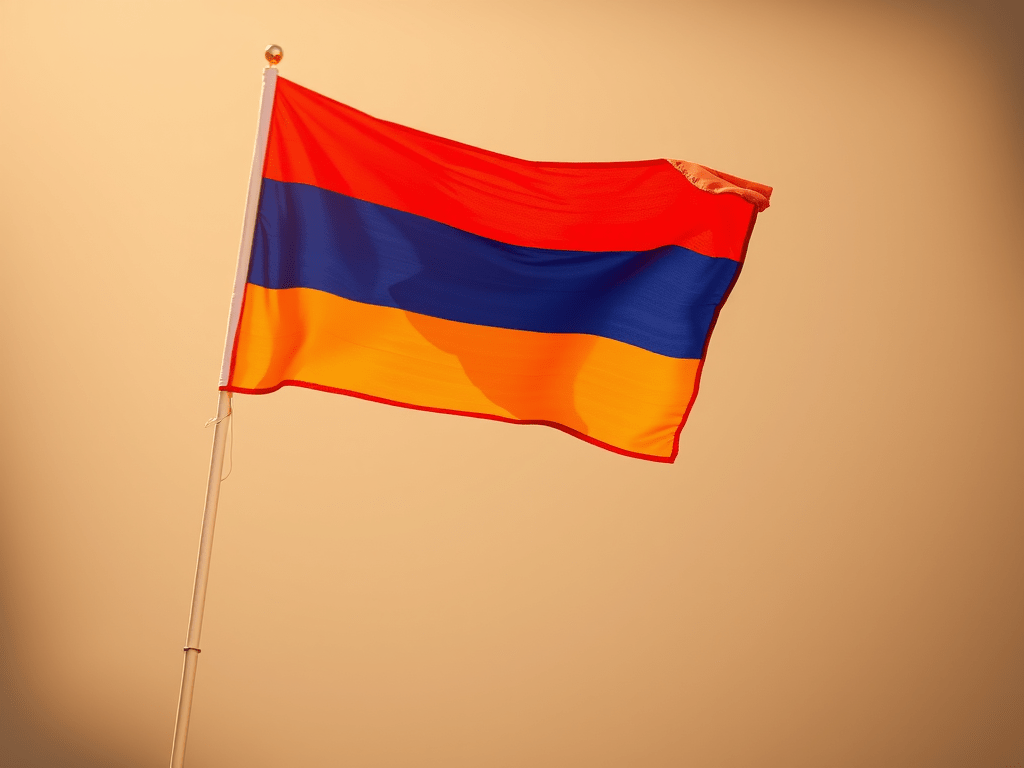
The random country generator has thrown out Armenia to kick things off, which is a delightful test of both finding an interesting club to look at, and also whether to classify a nation as Europe or Asia.
FC Ararat Yerevan
Originally founded as Spartak Yerevan in 1935, the club enjoyed early success in Armenia, winning domestic league titles before going on to compete in the competitions hosted by the wider Soviet Union.
With the club boasting an 83% win rate in the European Cup, it is fair to conclude that – at least in footballing terms – Armenia should be considered European, despite being geographically in Asia.
Contextually, Ararat have only ever played six matches in the European Cup, but percentages don’t lie. Real Madrid’s 60% win rate in the competition pales in comparison and it seems the Spanish giants have a long way to go until they can be spoken about alongside their Armenian counterparts.
All of Ararat’s European Cup matches came in the 1974-75 instalment of the competition. Ararat faced Norway’s Viking, Ireland’s Cork Celtic, and a little-known German outfit known as Bayern Munich, each over two legs.
They beat Viking and Cork home and away, and although they went out in the quarter-finals to eventual champions Bayern (2-1 on aggregate), they managed to win the second leg 1-0 in front of a crowd of 70,000 at Hrazdan Stadium in Yerevan.
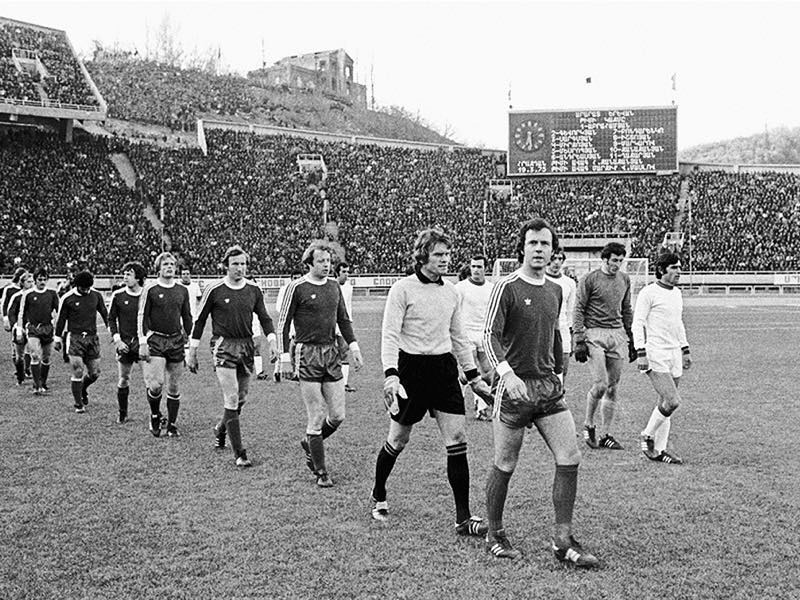
Although this was an impressive European campaign for the Armenian outfit, what was perhaps more notable was the reason that they were there. Armenia was a part of the Soviet Union at this time, and Ararat qualified through winning the Soviet Top League in 1973.
What is most interesting about this is that Soviet football in this era was dominated by what are now Russian and Ukrainian clubs. Georgia’s Dinamo Tbilisi (2), Belarus’ Dinamo Minsk (1), and of course Armenia’s Ararat Yerevan (1) are the only clubs outside of Russia and Ukraine to have won the Soviet title, totalling a mere four titles between them.
Ararat’s claiming of the Soviet title was an outstanding achievement. They were the only Armenian representative given the honour of competing in the Top League, and they did their state proud. Ararat impressed in the competition on two other occasions, with second-place finishes in 1971 and 1976. On top of this, Armenia’s ‘White Eagles’ also lifted the Soviet Cup in 1973 and 1975.
Over the course of the 1970s, Ararat established themselves as Armenia’s greatest club, which only serves to make their story since the dissolution of the Soviet Union more upsetting.
In 1993, not long after Armenia’s independence, Ararat claimed the Armenian Premier League title for the first time, but since then, they have never managed to repeat the feat. Instead, a Yerevan rival by the name of Pyunik has risen to dominate Armenian football.
The kicker? Pyunik were founded by a former Ararat player, Khoren Oganesian. Oganesian lifted the 1975 Soviet Cup with Ararat, helping to cement their legacy before becoming an influential figure in destroying it. Pyunik have now won 16 Armenian league titles, comfortably eclipsing Ararat’s solitary championship 32 years ago.
Ararat came closest to another title in 2008, where they ended the season with the joint highest points alongside their old foe Pyunik, courtesy of defeating them on the final day. The title was then decided by a playoff, which ended 1-1 in 90 minutes, before Pyunik turned home a 118th-minute winner to break Ararat hearts again. Ararat haven’t got close to a title since.
To add insult to injury, another Yerevan-based club by the name of FC Ararat-Armenia was founded in 2017, prompting a statement from Ararat Yerevan against their name. Ararat-Armenia have gone on to claim the Armenian title twice in their eight year history, again outdoing Ararat Yerevan.
Life for Ararat Yerevan since the Soviet Union has largely consisted of being a spectator to their rivals’ successes. They have claimed six Armenian Cups – including a hat-trick of successes in the ’90s and the latest in 2021 – meaning they aren’t complete strangers to success in the modern era, but they are desperately craving that elusive second league title.
Legends
Arkady Andreasyan
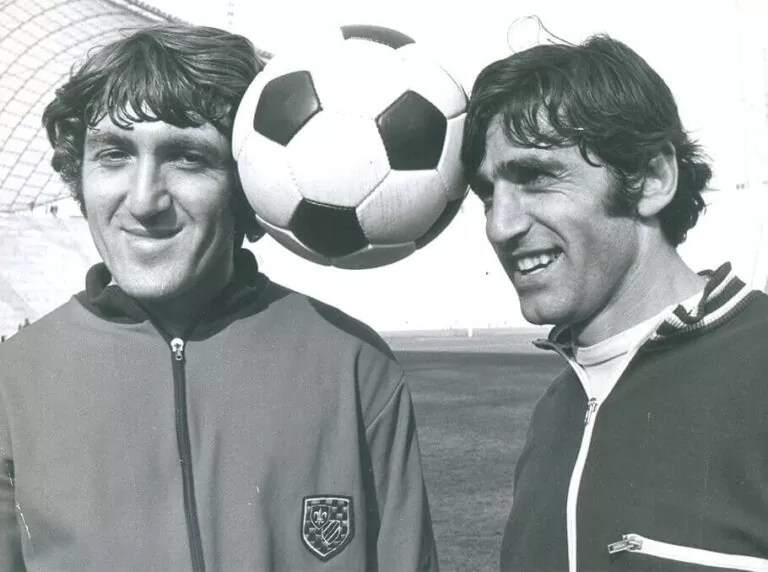
Arkady Andreasyan is a bona fide Ararat Yerevan legend. He was born in the present-day Azerbaijani capital of Baku, he played for the Soviet Union and he was a key part of the successful Ararat sides of the ’70s. Andreasyan lifted the Soviet league title and two Soviet Cups with Ararat as a player, before going on to coach the team to an Armenian Cup in the ’90s.
He was a midfielder with a keen eye for goal, famously scoring the single goal in Ararat’s home victory over Bayern Munich, as well as claiming the Soviet Top League golden boot award as they placed second in 1976.
With a successful playing career at Ararat, as well as two stints as manager, it is safe to say that Arkady Andreasyan’s name is firmly written in the Ararat Yerevan history books.
Eduard Markarov
Also born in Baku, Eduard Markarov is another to have been a part of the great Ararat sides of the ’70s before going on to manage the club, the difference being that his managerial stint came during that same decade.
Markarov was a striker. He claimed the same team trophies with Ararat as Andreasyan, and much like his teammate, he also claimed a notable golden boot. Markarov’s golden boot perhaps trumps Andreasyan’s, however, as he shared the European Cup golden boot in 1975 with a certain Gerd Muller.
Whilst Andreasyan continued playing, Markarov became manager of the club almost immediately after their European Cup season, and was in charge as Ararat became the nearly-men of 1976, impressively placing as runners-up in both the Soviet Top League and the Soviet Cup.
Markarov went on to coach Malatia Yerevan to their first Armenian league title, before the Armenian FA recognised his managerial acumen and gave him the national team job. The man is an Ararat legend for sure, and perhaps a legend of Armenian football in general.
Nikita Simonyan
It would be harsh to talk about the players of Ararat’s golden era without mentioning the manager who made it all possible. Nikita Simonyan is a Soviet football icon. He was a prolific striker in his day, scoring over 100 goals for Spartak Moscow and claiming multiple Soviet Top League titles in the process.
As a manager, he first led his old club Spartak Moscow to a number of trophies amidst stints as USSR manager, before joining Ararat in 1973 and immediately claiming a league and cup double. He went on to manage the club a second time in the ’80s, shortly before retiring.
The only stain on his record at Ararat is that he did not stick around the see out their European Cup campaign, with Victor Maslov taking charge of their Bayern Munich tie during his short period as manager before Markarov took over. With Simonyan at the wheel, who knows how far they might’ve gone in the competition?
Stadium
Some of Ararat’s most memorable days came at Hrazdan Stadium, a huge arena in Yerevan that once hosted Ararat, as well as many cup finals and Armenian national team matches. It was one of the Soviet Union’s most notable stadiums, and could hold over 70,000 spectators at its peak.
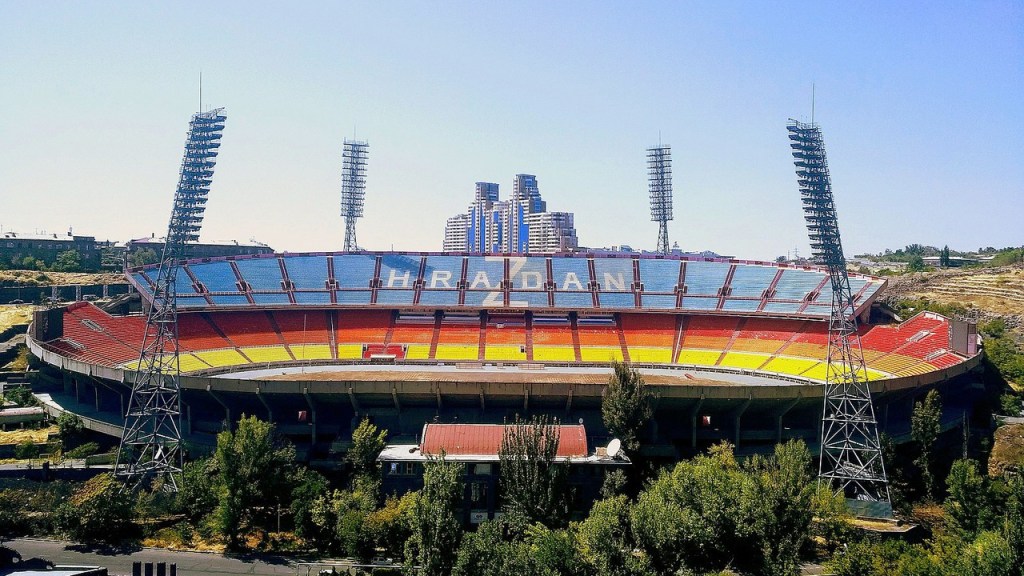
It was here that saw Ararat’s glory days in the ’70s. They played in the first ever football match at Hrazdan in 1971, defeating Kairat Almaty 3-0; it was then their home ground during the league and cup double of ’73, and it was of course the scene of Ararat’s famous victory over Bayern Munich in 1975.
In the ’90s, both Ararat and the Armenian national team downsized to the 14,000-seater Republican Stadium, which is also the home of city rivals Pyunik. Despite the fact that the stadium is considerably smaller than the still-standing Hrazdan, it has effectively become the home of Armenian football, and is historic in its own right.
Major Honours
Soviet Top League Winners: 1973
Soviet Top League Runners-Up: 1971, 1976
Soviet Cup Winners: 1973, 1975
Soviet Cup Runners-Up: 1954, 1976
Armenian Premier League: 1993
Armenian Premier League Runners-Up: 1997, 1999, 2000, 2008
Armenian Cup Winners: 1993, 1994, 1995, 1997, 2008, 2021
Armenian Cup Runners-Up: 2001, 2007


 Around the World in 80 Clubs
Leave a reply to Matt Cancel reply