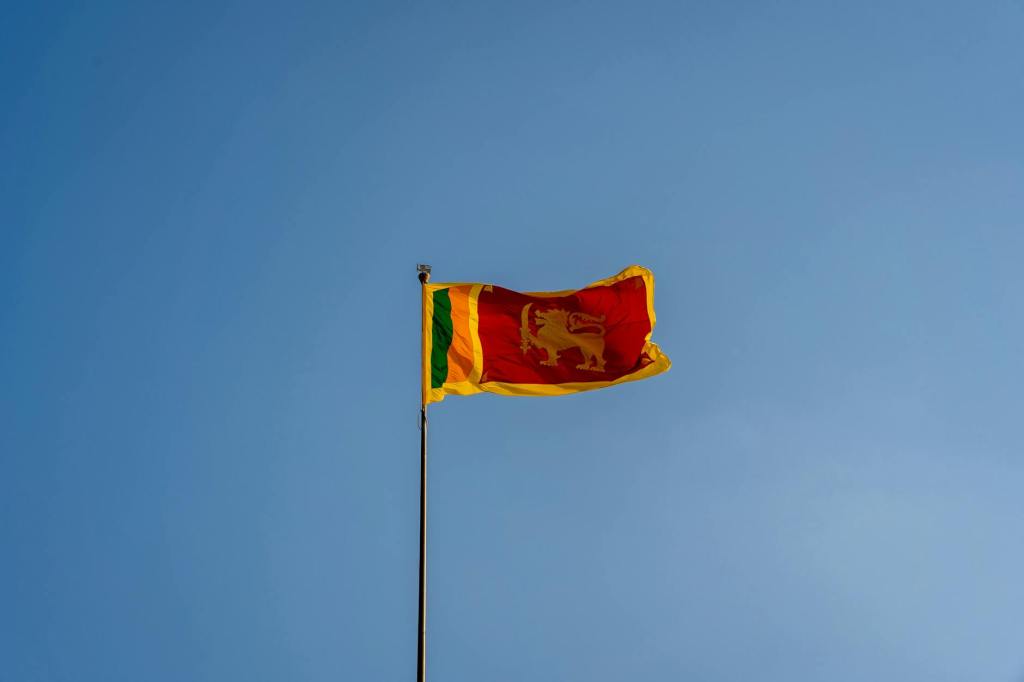
Sri Lanka has proven to be the biggest challenge yet in finding a story, with limited verifiable information, inconsistencies in the data that does exist, and a domestic football league that has been plagued by interruptions in recent years.
It is also very much a cricketing nation. The Sri Lankan FA has been making efforts to grow football in recent years, but having failed to complete a full league season since the Coronavirus pandemic, those efforts have predominantly been with the national team.
The lack of club football in recent years makes understanding the Sri Lankan domestic game exponentially more difficult. This is because the league system went through a major format change immediately before the pandemic hit, meaning that there has only ever been half a season completed under the current iteration of the league system.
To put it simply, the top flight of Sri Lankan football had been known as the Champions League for a number of years, but after the 2019 season the league was split into two, with the Champions League becoming the second tier, and a new league called the Super League replacing it as the top division.
Which teams entered which league was based on performances in the 2019 season, and crucially, Saunders SC – Sri Lanka’s most successful club – had placed 15th, meaning there would be no spot for them among the 10 teams to enter the Super League.
Obviously, in early 2020 the world was rocked by Coronavirus, and any club football was ceased in Sri Lanka until 2021. A major reason that football became so difficult during this period is that the vast majority of top Sri Lankan sides are based in the capital – Colombo – and share the same home ground, so it would’ve been nigh-on impossible to avoid large numbers mixing on matchdays.
Over the course of 2021, stretching into early 2022, Sri Lankan clubs managed to complete a single round of league fixtures, playing each other once each in a round-robin format, as opposed to the two rounds of fixtures that were intended.
The league was called there, with the inaugural Super League title going to Blue Star SC. Saunders failed to gain promotion from the Champions League.
Since then, league and cup fixtures have remained off, but the Sri Lankan FA have announced their intentions to bring the Super League – and presumably the Champions League – back in 2025.
Ratnam SC
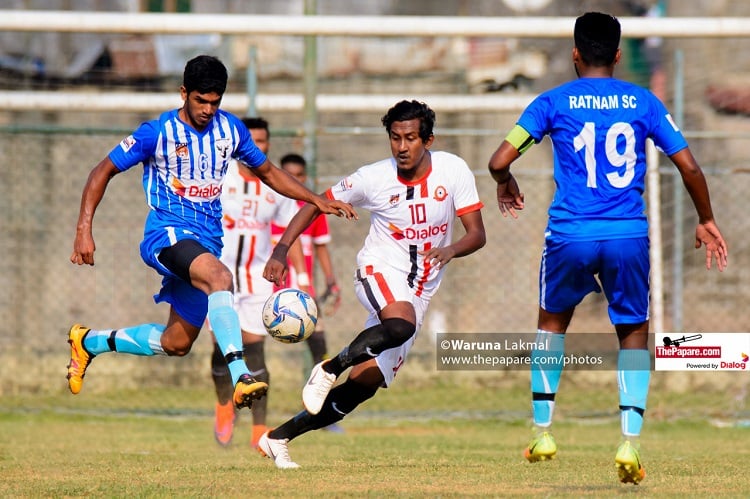
With 12 league titles and 16 FA Cups, Saunders are comfortably Sri Lanka’s most successful club, but they haven’t won anything since 2005. They are Sri Lanka’s fallen giant and could easily have been the focus of this piece, but instead it is Ratnam SC, their Colombo rivals.
Ratnam have been successful in their own right, just not to quite the same degree as Saunders. They have won the second-most top division titles at five, as well as six FA Cups.
They experienced a period of sustained success in the 2000s, winning three league titles and coming second on four occasions. In 2000 they won the double, and between 2004 and 2009 they never placed lower than second, at the same time winning a hat-trick of FA Cups between 2004 and 2006.
They can also boast one achievement that Saunders cannot; they have produced the joint-best performance of a Sri Lankan club in a continental competition (you’ll never sing that), reaching the semi-finals of the AFC President’s Cup in 2007.
The President’s Cup, now known as the AFC Challenge League, is essentially the Asian Conference League, standing as the third-rate continental competition in Asia.
Nevertheless, with the Asian coefficients as they currently are, it is the only continental competition that Sri Lankan clubs can qualify for, so it is an achievement in its own right for clubs from this humble South Asian nation.
Ratnam were defeated on penalties in the semi-finals by the eventual champions, FC Dordoi Bishkek of Krygyzstan, who successfully defended their crown having won the competition in the previous year.
Clearly, there was no shame in this defeat, and Ratnam took their heartbreak back to Sri Lanka as fuel to help them win both the 2007 and 2008 domestic league titles.
Since then, only the one league title has followed (2012), but Ratnam remained strong enough in 2019 to be placed into the Super League. Unfortunately, they did not offer the best version of themselves in the new top division.
They placed ninth of 10, and although the competing clubs have yet to be announced for whenever the new season starts, there is every chance that this will have seen them relegated to the Champions League.
Both Ratnam and Saunders are top division royalty, but by the time competitive club football in Sri Lanka begins again, they could be stuck in the second division, battling it out for promotion – a far-cry from the days when they won a combined six top flight titles in the noughties.
Here’s hoping that domestic football in Sri Lanka can fully recover and begin to grow, and that Ratnam can get themselves back to the top.
Legends
Kasun Jayasuriya
Kasun Jayasuriya is Sri Lanka’s greatest ever goalscorer. He is both the national team’s record goalscorer and the highest goalscorer in Sri Lankan top division history.
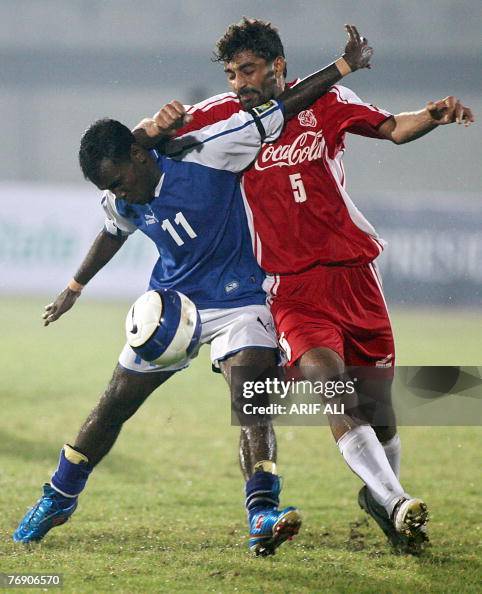
He played for a number of Sri Lankan clubs as well as Ratnam. Most recently he turned out for Saunders towards the back end of his career.
Back in his prime, Jayasuriya joined Ratnam just in time to help them finish off their three-peat of cup wins in 2006, and scored 24 goals in the league in the same season to win the golden boot.
In 2007, he would go on to retain his golden boot as Ratnam won the league title, as well as scoring Ratnam’s only goal in the 1-1 draw with Dordoi Bishkek as they went out of the President’s Cup on penalties.
Channa Ediri Bandanage
Another player who is a legend with the Sri Lankan national team as much as he is with Ratnam, Channa Ediri Bandanage has made the most international appearances of anybody for Sri Lanka.
A striker much like Jayasuriya, Bandanage was perhaps slightly less prolific, but was still a part of some important days in Ratnam’s history. He won multiple trophies with the club in the 2000s alongside Jayasuriya, before returning to the club a few years later to lift the 2012 title with them as well.
Despite Jayasuriya often outscoring him throughout their careers, Bandanage was the top scorer of the 2007 President’s Cup, helped to the award by a haul of five goals in one match against Bhutanese club Transport United.
Managers
A detailed breakdown of Ratnam’s managerial history is difficult to come by, but it would be unfair to talk about their period of sustained success without giving an honourable mention to the coaching staff that made it all happen.
Not all of these individuals can be named, but two men that certainly played some part in their tactical successes were Anthony Balendra and Pakir Ali, who were involved with the club during the fruitful years of the mid-to-late noughties.
Stadium
Sugathadasa Stadium, in the capital city of Colombo, has historically held a capacity of around 25,000 people, although renovation work has been planned in recent years to potentially increase that by as much as double.
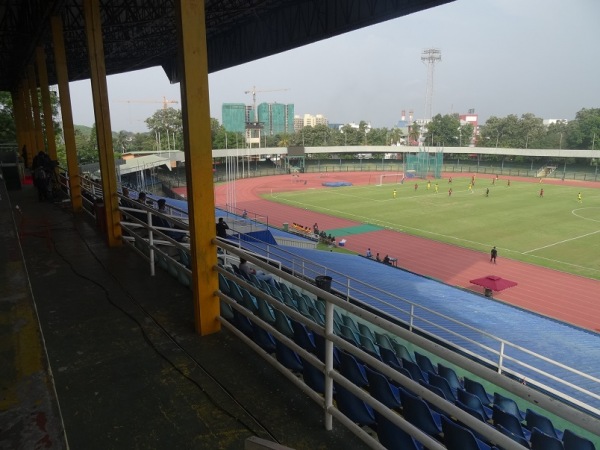
The stadium hosts a number of Sri Lankan clubs’ matches, with the majority of the country’s better teams being based in Colombo, and large stadium facilities being sparse. The stadium has a hotel, a running track surrounding the pitch, and it is also used for national team matches in both football and rugby.
Some of the stadium’s biggest moments have come in twice hosting the South Asian Games in athletics and once hosting the Asian Athletics Championships. In football, its highest honour was being the main venue of the 2010 AFC Challenge Cup, which is of course the same competition as the President’s Cup that Ratnam excelled in three years prior.
In recent years, some sides such as Saunders have also begun to use the Kelaniya Football Complex, which is another – smaller – venue that hosts football matches in Sri Lanka’s capital.
Major Honours
Sri Lankan Top Division Winners: 1998, 2000, 2007, 2008, 2012
Sri Lankan Top Division Runners-Up: 1991, 2004, 2005, 2006, 2009, 2014
Sri Lankan FA Cup Winners: 2000, 2002, 2004, 2005, 2006
Sri Lankan FA Cup Runners-Up: 1961, 1995

 Around the World in 80 Clubs
Leave a comment