With Ukraine following Germany and Armenia, the randomiser has so far thrown up two former Soviet Union states and another that was firmly in the middle of the Cold War. You would be forgiven for suggesting it might have some sort of hyper-fixation on the Eastern Bloc.
There is some crossover between Ukrainian and Armenian football history, as each state’s clubs competed in Soviet football for a significant period of time. However, Ukrainian clubs were generally more successful during this time, with Dynamo Kyiv being the winningest side in Soviet Top League history, and the likes of Dnipro and Zorya also winning Soviet league titles.
Having covered some interesting points about football during the Soviet era looking at Ararat Yerevan in Armenia, with Ukraine it is perhaps more fitting to delve into the tumultuous recent history of its domestic football.
Since the dissolution of the Soviet Union and Ukrainian independence, Dynamo Kyiv have continued to be a successful club in Ukrainian football; between them and their major rivals Shakhtar Donetsk, they have won all but one Ukrainian Premier League title.
Incidentally, both of these clubs are also the only Ukrainian clubs to have had notable successes on the continental scene.
Dynamo’s real glories came mostly in the Soviet era, winning two European Cup Winners’ Cups and a European Super Cup, but since then they have troubled the latter stages of the Champions League on occasion, as have Shakhtar.
Unlike Dynamo, Shakhtar have lifted a European trophy flying the Ukrainian flag, claiming the UEFA Cup in 2009 after beating their age-old Ukrainian rivals in the semi-finals, and completing the job in extra time of the final against Werder Bremen.
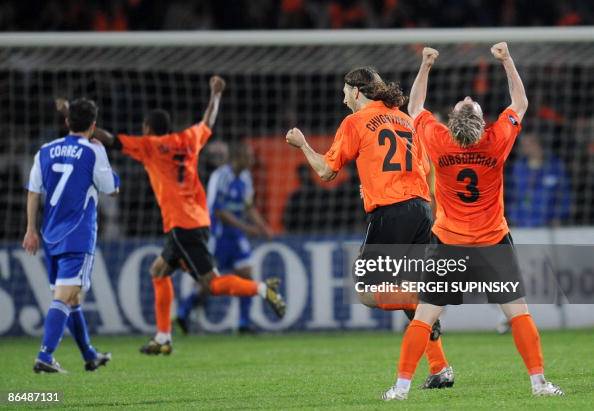
In the last few years, major strains have been put on Ukrainian football due to the conflict with, and invasion by, Russia. Certain clubs have ceased to exist, others have had to relocate, and those lucky enough to compete in European competitions have lost a competitive advantage through having to play their home games abroad.
SC Tavriya Simferopol
Having established the dominance of Shakhtar Donetsk and Dynamo Kyiv in Ukraine, it won’t surprise anybody to read that the club in focus are of course the only side to have taken a league title off of the country’s two superpowers.
SC Tavriya Simferopol won a handful of less reputable, Ukraine-specific trophies during the Soviet era. They spent only one season in the Soviet top flight, and they were by no means one of the biggest names in Ukrainian football when independence came.
Nevertheless, in the inaugural Ukrainian Premier League season, beginning in 1992, they rose to the fore of Ukrainian football and claimed the first league title of the independent nation. As huge underdogs, they overcame Dynamo Kyiv with a 1-0 victory in the final.
This really was an unprecedented success for the club, supported by the fact they would never again muster as much as a podium finish in the league.
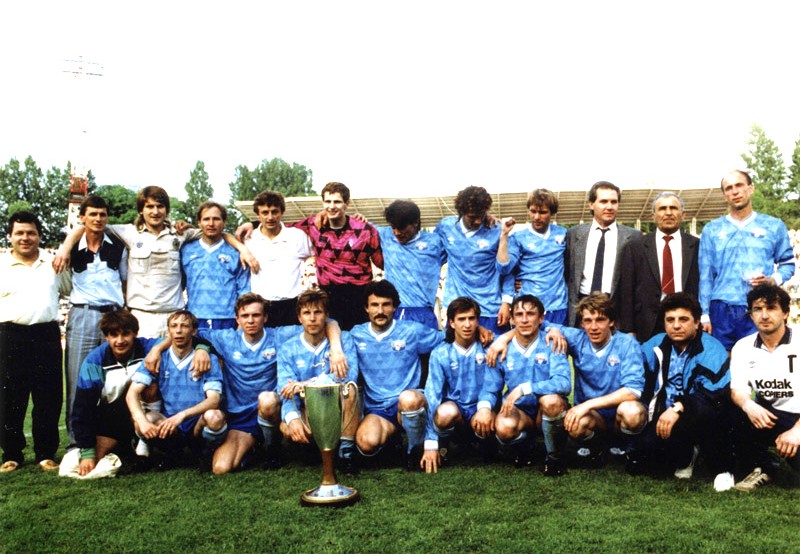
Tavriya’s league victory meant that in the 1992-93 season, they would also be present in the first edition of the European Champions League, with the European Cup being renamed as such after the 1992 tournament.
Tavriya didn’t pull up any trees. They reached the competition proper after beating Ireland’s Shelbourne in the qualifying round, but went down 7-2 on aggregate to Sion of Switzerland in the first round.
Despite a lack of further league success, the club managed to win the Ukrainian Cup in 2010, defeating the now bankrupted Metalurh Donetsk in the final and being afforded another opportunity to compete in Europe as a result.
This time, things went even worse for the Ukrainians, losing both legs of their Europa League play-off tie against Bayer Leverkusen, and being immediately knocked out.
The club’s furthest advancement in Europe came in their only other entry, the 2008 Intertoto Cup, where they reached the third round courtesy of a 3-1 win over Moldova’s Tiraspol, before being unlucky to go out in extra time against relative French giants Rennes, having won their home leg 1-0.
Although Tavriya didn’t boast a long list of major honours, they went into 2014 having never been relegated from the Ukrainian top flight. Unfortunately for them, this year brought with it Russian interference, and immeasurable changes to the club’s infrastructure as a result.
Simferopol is the second-largest city on the Crimean Peninsula. Crimea is recognised internationally as a part of Ukraine, and effectively it was until Russia decided to annex it in 2014. This brought significant conflict to the area, with Russia gaining de facto control of what they call the Republic of Crimea, and naming Simferopol as its capital.
What this meant for Tavriya is that the club could no longer compete in Ukrainian football, and Tavriya Simferopol as they were, ceased to exist.
Two phoenix clubs rose from the ashes. TSK Simferopol came first in 2014, comprised of some of Tavriya’s former staff and players.
This club would stay in Simferopol and compete in the Crimean Premier League, which is an independent league in Crimea and is sanctioned by UEFA, meaning there has been little to no scope for its teams to advance anywhere in either the Russian or Ukrainian football league systems.
In Ukraine, SC Tavriya Simferopol were eventually re-founded ahead of the 2016 season, re-entering the Ukrainian football leagues in the fourth tier. This club would relocate to the oblast of Kherson but continue to bear the Simferopol name.
There were elements of both of these clubs that could represent the original Tavriya, but one thing was for sure; either way, the club’s status as a top flight mainstay had been completely decimated.
The years that have followed have not been especially kind to either of these two clubs. The club in Crimea have won the Crimean Premier Division multiple times, but have been unable to progress anywhere from there due to UEFA restrictions.
These restrictions were bypassed on one occasion in 2023, with a number of top-performing Crimean clubs being admitted to the Russian league system. Despite winning the competition on four occasions, including either side of 2022, TSK did not finish near the top in the all-important 2022 season, and thus have remained trapped in the lowly Crimean Premier League.
What becomes of the Crimean club in the future is difficult to speculate on, and is largely going to be determined by the politics surrounding the conflict between Russia and Ukraine.
Devastatingly, things have gone even worse for the Ukrainian Tavriya Simferopol. They merged with another Kherson-based club – Tavriya Novotroitske – in 2020, and were at this point on the path back towards the top flight as they would compete at level three on the pyramid.
Alas, 2022 brought with it the Russian invasion of Ukraine, and the Kherson oblast was largely lost to the Russian military, meaning that the club that had fought valiantly to re-establish itself and get back on its feet within Ukrainian football was removed from existence again.
Perhaps in the future, third time will be a charm and Tavriya can return to the standing in Ukrainian football that was undeservingly taken away from them.
Legends
Anatoliy Zayaev
Back to the original Tavriya then, and to the league-winning season of 1992. Anatoliy Zayaev was born in Simferopol, and had multiple stints in charge of the club. Importantly, one of these stints was between 1991 and 1993, and he oversaw the club winning the Ukrainian Premier League title.
He worked with the club on no fewer than nine occasions, under various different roles but most often as manager. This was a man that dedicated a large chunk of his life to his hometown club, and delivered them their greatest triumph.
Yuriy Hudymenko
One of the three most influential players in their league-winning season, Yuriy Hudymenko claimed the golden boot with 12 goals in 18 appearances. He made two appearances for the Ukraine national side, scoring once.
Serhiy Shevchenko
Perhaps the truest legend of their league-winning players longevity-wise, captain Serhiy Shevchenko made 180 league appearances for Tavriya, scoring 71 times, including the winner in the league final against Dynamo Kyiv.
He would also later manage the club, and then go on to manage TSK Simferopol in Crimea. He won a Crimean Premier League title with the latter.
Oleksandr Holovko
Centre-back Oleksandr Holovko found the most sustained success of the mentioned players, adding to his title with Tavriya by winning a plethora of further league titles with Dynamo Kyiv between 1995 and 2004.
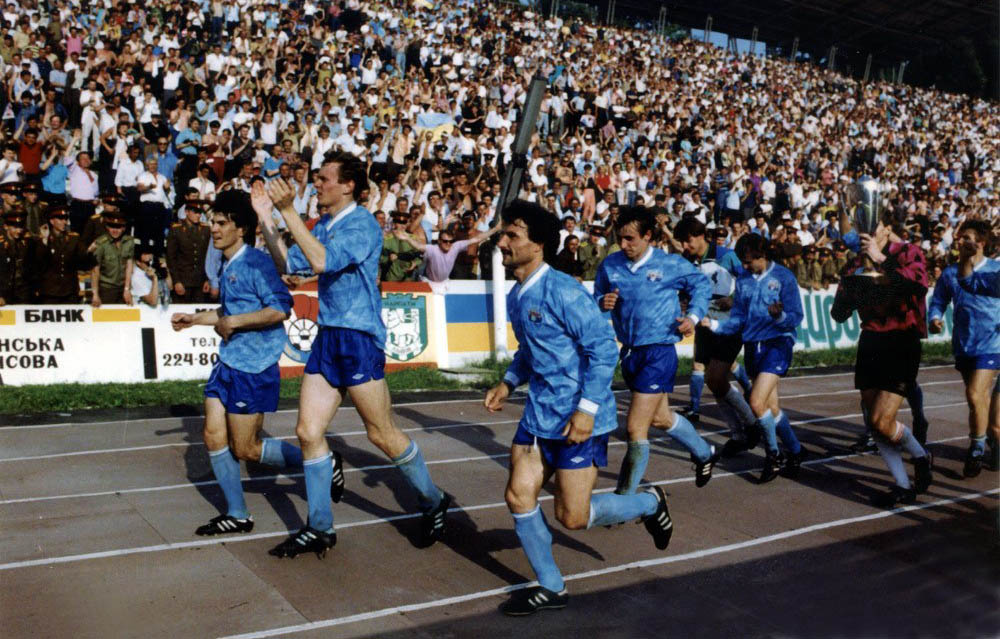
He represented Ukraine on 58 occasions, cementing his place as not only a hero to Tavriya, but a Ukraine legend.
Serhiy Puchkov
Finally, it would be harsh not to include the Ukrainian Cup-winning manager of 2010, Serhiy Puchkov. Part of a different era at the club, Puchkov nevertheless brought unexpected glory to Simferopol.
He managed the club a second time in 2021, making him part of the club in its final months of existence.
Stadium
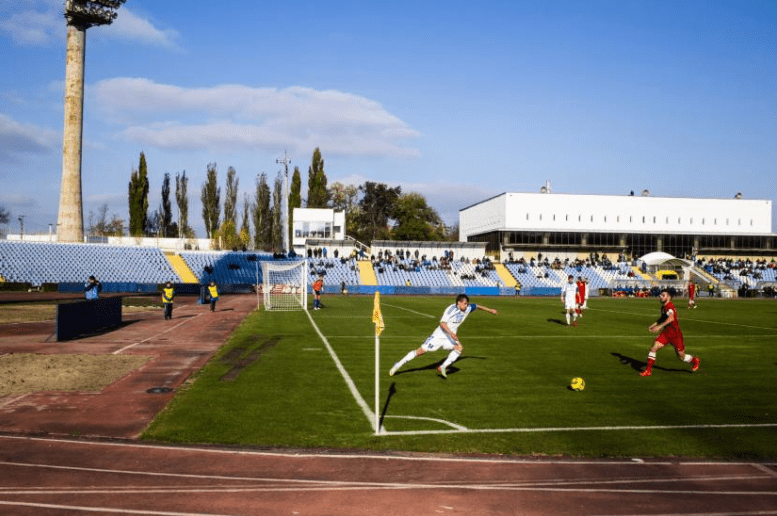
RSC Lokomotyv was the home of Tavriya Simferopol until 2014, and remains the home of TSK today. It seats around 20,000, and has previously had attendances of over 30,000.
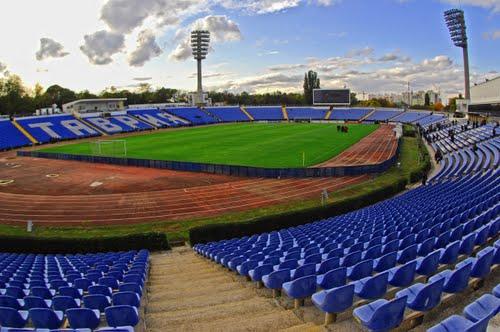
Remarkably, this was actually the main home ground of the Soviet Union during qualification for the 1988 European Championships, hosting their matches against both Norway and Iceland. Both were wins to nil, with the stadium playing a key part in history as the Soviet Union topped their group as a result, famously going on to lose to the Dutch in the final of the competition proper.
The Soviet Union used the stadium four times overall, and boasted a 100% record there.
Major Honours
Ukrainian Premier League Winners: 1992
Ukrainian Cup Winners: 2010
Ukrainian Cup Runners-Up: 1994

 Around the World in 80 Clubs
Leave a comment