One of football’s superpower nations is up sooner than expected, as Germany are the second name out of the hat.
Both domestically and internationally, Germany is home to an extensive and convoluted footballing history, with a plethora of stories, many of which are familiar to the masses already.
There are fallen giants such as Schalke 04, dominant forces such as Bayern Munich, and feel-good journeys such as 1. FC Heidenheim’s meteoric rise from the fifth tier into the Bundesliga European spots under Frank Schmidt.
There are so many popular stories in German football, but there is one thing that the majority of them have in common, and that is that they concern clubs from former West Germany. So what about the East German clubs?
Football in Germany has been influenced significantly by the Cold War, as for a large portion of the 20th century, East German clubs competed in separate domestic leagues to West German clubs.
To offer a brief history lesson, the Berlin Wall fell in 1989, which was a significant moment in the lead-up to the reunification of Germany in 1990. In footballing terms, this meant that from 1991 onwards, the West German Bundesliga and the East German Oberliga would combine into the German Bundesliga.
Since then, no side from East Germany has ever won a Bundesliga title. In fact, only a handful of East German clubs have even competed in the top flight, and it is safe to say that clubs from West Germany have dominated German football.
It would be fair to argue that East German clubs haven’t been given a completely fair rub of the green. The inaugural Bundesliga season of 1991-92 saw 20 teams compete in the combined league, but only two of them were from East Germany.
This was influential in the fact that many of East Germany’s most successful clubs tumbled down the German football pyramid due to financial issues.
FC Hansa Rostock held firm for a number of years, and they currently hold the record for the longest sustained period of a former East German club remaining in the Bundesliga, between 1995 and 2005.
Eventually, they too succumbed to the seemingly inevitable demise of football clubs from East Germany, and currently find themselves in the third tier of German football.
Hansa Rostock lead us naturally into the issue with focussing on some of the more prominent East German clubs, as despite their history making for a compelling story, they are tarred by the links between their supporters and Neo-Nazism.
Hansa have a political rivalry with the famously progressive FC St. Pauli, on account of their rather opposing ideologies.
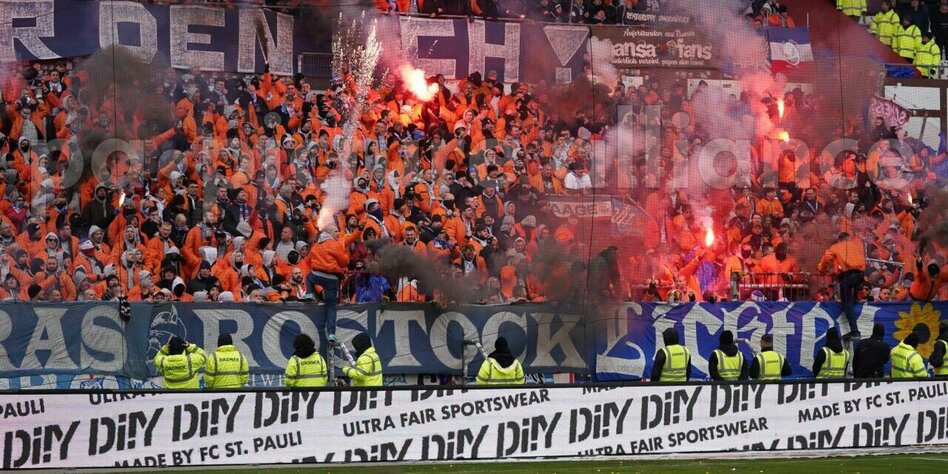
None of this necessarily matters, but with the human tendency to root for the underdogs – as East German clubs have become – it seems important to note that in a country with a political history as storied as Germany’s, there is likely some additional context to consider in whether you can align yourself with a club ideologically.
Returning to the football side of things, the club in focus here are of course an East German club, and their story is one of past successes, times of struggle and in more recent seasons, hope.
1. FC Magdeburg
1. FC Magdeburg enjoyed relative success in the Oberliga days, winning the competition on three occasions in the 70s. Their real glories, however, were in cup competitions.
They share the record for the most FDGB (East German) Cup wins with Dynamo Dresden, at seven apiece. Perhaps more impressively, they are also the only East German side with European silverware, having won the now defunct European Cup Winners’ Cup in 1974.
Magdeburg beat some famous sides along the path to victory, defeating Portugal’s Sporting CP in the semi-finals before dispatching of European royalty AC Milan with a 2-0 victory in the final.
Towards the end of the Cold War, Magdeburg remained competitive in East German football, winning the FGDB Cup as late as 1983 and producing respectable league finishes throughout.
Nevertheless, when it came to combining the football leagues in 1991, Magdeburg found themselves placed in a reunited Germany’s third tier. They languished in the third and fourth divisions for a long time after, eventually recovering to reach the heights of the 2. Bundesliga as late as 2018.
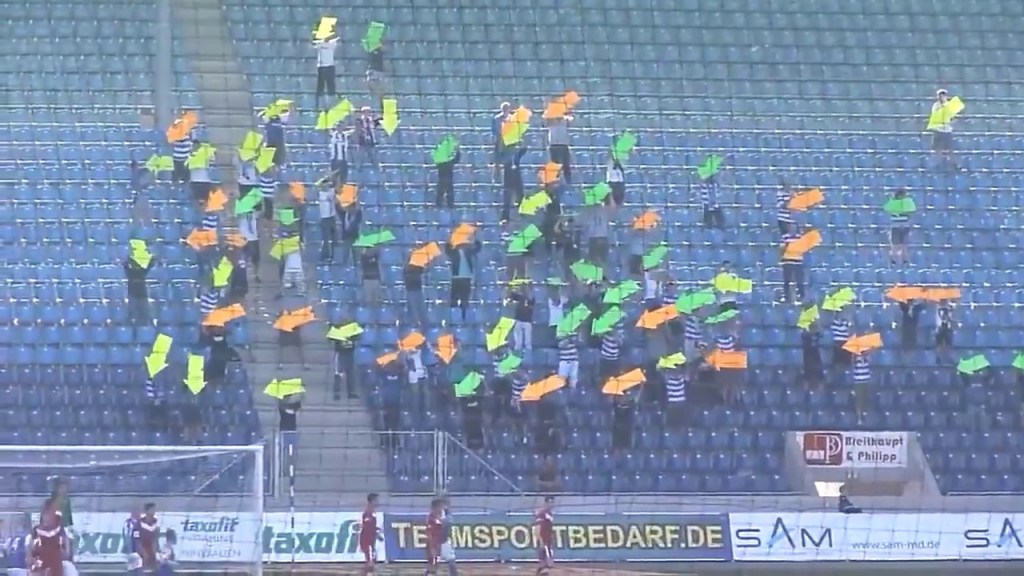
Indicative of FCM’s general struggles in the unified German football leagues was a viral photo back in 2012, depicting their fans – incandescent that the team had not scored for five straight matches – producing giant arrows pointed towards the goal in a tongue-in-cheek attempt to show the players what they should be aiming for.
Following their promotion to the second division in 2018, Magdeburg were immediately sent back down in 2019, but they returned in 2022 after winning the 3. Liga for a second time.
This time, it stuck for Der Club, and they have remained in the second division ever since. In the most recent season, manager Christian Titz guided the team to fifth place, falling just short of Bundesliga promotion, but instilling hope that the club might soon make it to the promised land for the first time.
In the context of former East German clubs, FCM are now one of the highest in the German footballing pyramid, with a number of their old rivals stuck in the third division or lower.
Legends
Joachim Streich
A prolific goalscorer, Joachim Streich is not only a Magdeburg legend but an East German football legend in general, as both the record appearance-maker and the record goalscorer for the East German national team.
Streich scored 171 goals in 237 league matches for Magdeburg, as well as achieving the Oberliga record for goals in one match as he netted six in Magdeburg’s 10-2 victory over Chemie Bohlen in 1977.
Over his career as a whole, he won the Oberliga golden boot on four occasions and East German footballer of the Year on two occasions. His honours at FCM were limited to three FDGB Cups, having joined the club slightly too late to take part in any of their league wins.
He went on to manage the club twice, his first spell being from 1985 to 1990, taking a title chase down to the final day in the 1990 season, but eventually finishing third behind champions Dynamo Dresden and FC Karl-Marx-Stadt (now Chemnitzer).
Jurgen Sparwasser
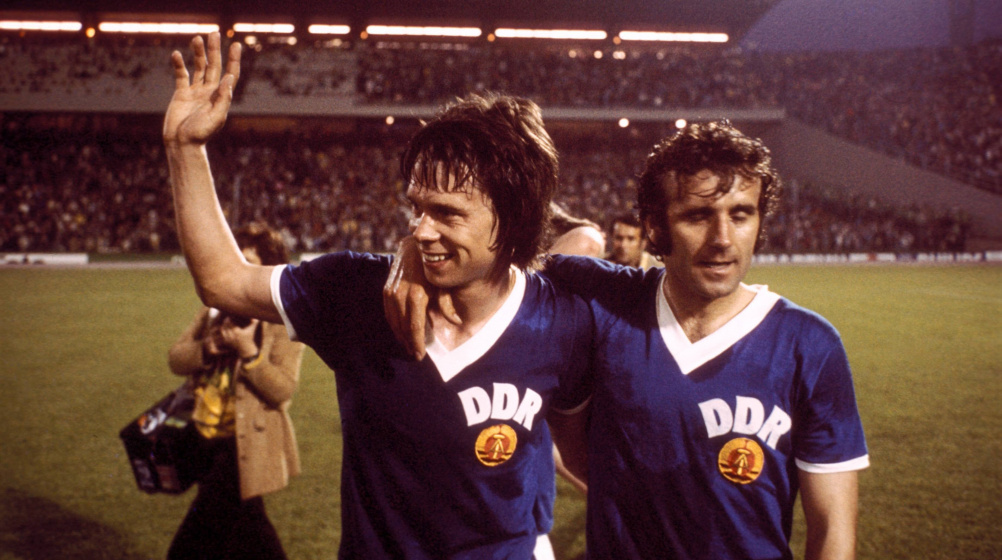
Another goalscorer, but in this case from midfield, Jurgen Sparwasser spent his entire career at FCM, scoring 133 times in 298 league matches. He was part of eight trophy wins with Magdeburg, including all three Oberliga wins, as well as the Cup Winners’ Cup victory in 1974.
1974 turned out to be the defining year of Sparwasser’s career, as after winning two cups with Magdeburg, he also represented the East Germany national team, for whom he scored a famous goal in the 1974 World Cup, netting the winner in a politically charged match-up against West Germany. Of course, as seems to always be the case in German football, West Germany got the last laugh as they went on to lift the World Cup trophy.
Heinz Krugel
Manager of the club from 1966 to 1976, Heinz Krugel took over a side in the second division of East German football, gained instant promotion, and then went on to win an abundance of major honours with the club, including the famous Cup Winners’ Cup.
Krugel was at the helm for what was undoubtedly the most fruitful period of the club’s history, and there is no doubt that he is a Magdeburg legend, but he was also a football purist, and garners further respect for refusing to take advantage of the Stasi (East German Secret Police) bugging the dressing room of West Germany’s Bayern Munich as Magdeburg went down to them in the 1974-75 European Cup. A certain Jurgen Sparwasser netted twice for FCM in this tie, for what it’s worth.
Stadium
Magdeburg’s glory days came at the Ernst-Grube-Stadion, where they resided for 49 years from 1955 to 2004. It was then demolished in 2005 in order for Magdeburg’s current stadium, Stadion Magdeburg (Avnet Arena for advertising purposes) to be built on its site in 2006.
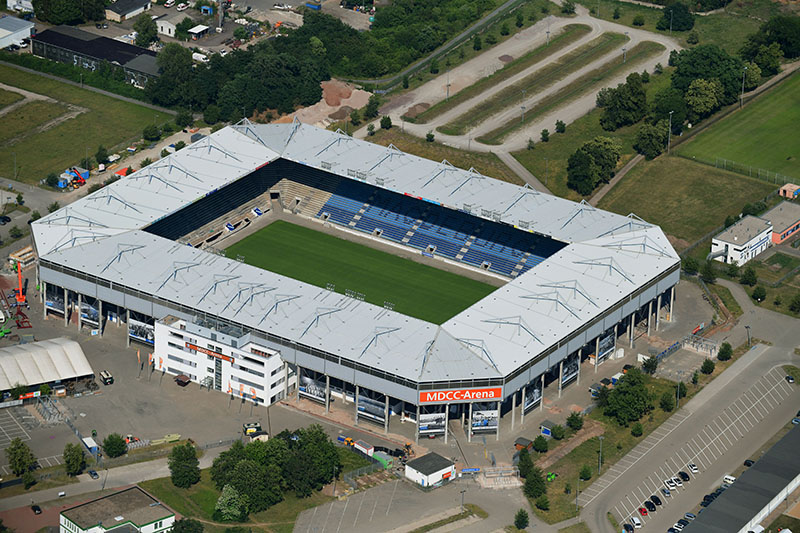
While it might have been unfortunate to knock down a stadium that had housed so many great memories for Der Club, it was necessary to bring the club into the modern era, and the Avnet Arena brought with it a capacity increase of 5,000 to boot, at 30,000 seats.
Despite their current stadium having a larger capacity, Magdeburg’s highest home attendance came at Ernst-Grube, which is unsurprising due to laxer safety laws back then.
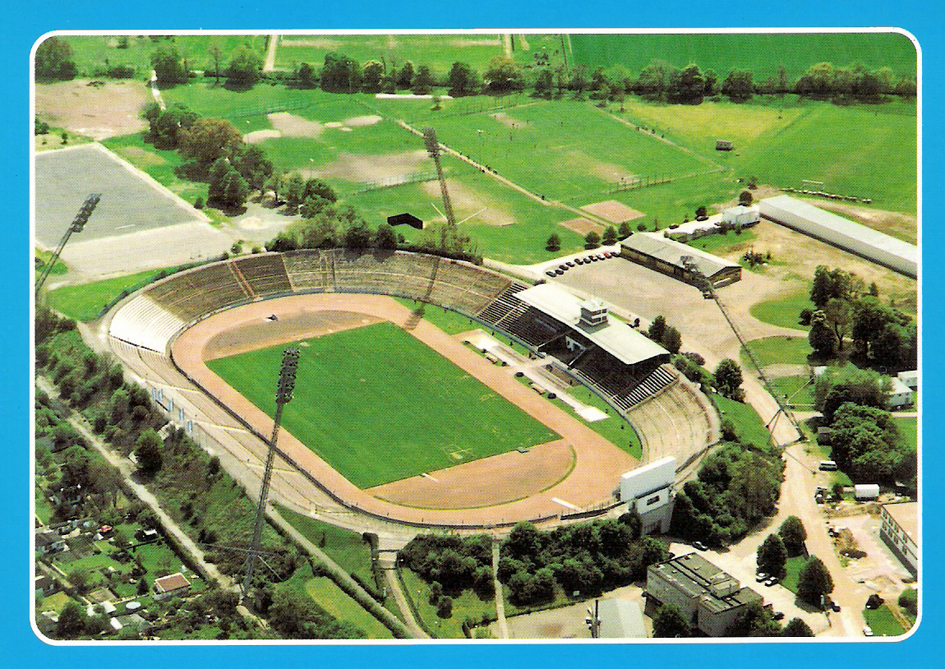
On the 8th of November 1972, over 40,000 spectators were in attendance as Magdeburg hosted Italian giants Juventus at Ernst-Grube-Stadion in the European Cup. The East Germans lost 1-0, a repeat of the first leg result, culminating in a 2-0 aggregate loss.
Major Honours
DDR-Oberliga Winners: 1972, 1974, 1975
DDR-Oberliga Runners-Up: 1977, 1978
FDGB-Pokal Winners: 1964, 1965, 1969, 1973, 1978, 1979, 1983
European Cup Winners’ Cup Winners: 1974
Rooting for the East Germans
Away from Magdeburg, if you do find yourself hoping for an East German club to finally secure Bundesliga glory, there are two – or rather one and a half – clubs that have a more realistic chance of doing so in the immediate future.
The first is 1. FC Union Berlin, who are a proper East German football club with a respectable history, despite never being particularly successful in the days of divided German football (they won one FDGB Cup in 1968).
Union are well on their way to chasing down Hansa Rostock’s record amongst former East German clubs of 10 consecutive Bundesliga seasons, having survived six seasons pretty comfortably and qualified for Europe on three of those occasions.
Most impressively, Union remained in the title race for a decent proportion of the 2022-23 season, eventually finishing fourth and qualifying for the Champions League. They have since fallen down the league table somewhat, but they have the structures in place to progress back towards the top again.
Then there is the half, which is RB Leipzig, who despite being geographically from the east of Germany, did not exist until long after German reunification, so cannot really count as an East German football club.
They are also not the most popular side with German neutrals, for a number of reasons largely associated with their ownership, so although they have a tangible chance of winning Bundesliga glory in the coming years, you might feel it is more appropriate to get behind Union Berlin.

 Around the World in 80 Clubs
Leave a comment